Fulfilled in the USABatch Produced & TestedFast & Discreet Shipping≥99.4% Purity Guaranteed6-Panel COA Every BatchThird-Party Tested24/7 SupportFulfilled in the USABatch Produced & TestedFast & Discreet Shipping≥99.4% Purity Guaranteed6-Panel COA Every BatchThird-Party Tested24/7 Support
Home��ProductsCagrilintide
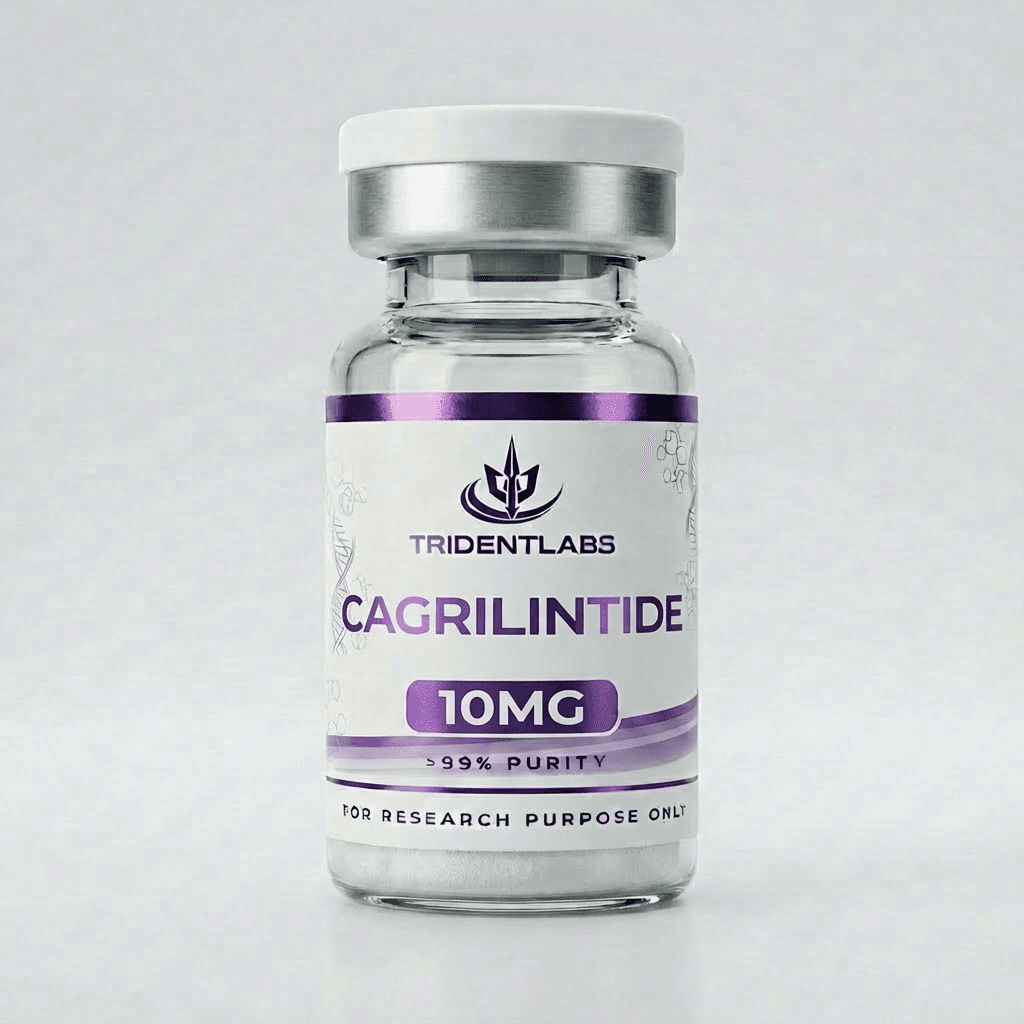
Cagrilintide 10mg
For Research Use Only
Trident Labs

Cagrilintide

10mg · ≥99.4% Purity

Verified

"≥99.4% Purity"HPLC VerifiedThird-Party TestedShips Same Day
Order within — Ships Today.
Select size
Select your bundle
Buy 1 Get 1 Free
Save 50%~ 2 week supply
$200.00$400.00$100.00 / vial
Most Popular
Buy 2 Get 2 Free
Save 50%~ 1 month supply
$400.00$800.00$100.00 / vial
Best Value
Buy 3 Get 3 Free
Save 50%~ 6 week supply
$600.00$1200.00$100.00 / vial
We Accept:VISAAMEX
Free shippingon orders over $150
60-day money-backguarantee
Secure checkout256-bit SSL

Transparency

Certificate of Analysis

Every batch independently verified by third-party laboratories.

PASS

Batch #TL-2503

Analytical Formulations Inc.

Live
HPLC Purity≥99.4%
LC-MS IdentityConfirmed
SterilityPASS
ContaminantsND
Heavy Metals<20 ppb
TAMC / TYMCPASS

All Trident Labs products are independently tested by accredited third-party laboratories. Results are batch-specific and provided for research transparency only. This product is not approved for human use.

AMY-1CA (Cagrilintide) — Trident Labs

For Research Use Only — Not for Human Consumption. AMY-1CA is not a drug, food, dietary supplement, cosmetic, or medical device. Not intended to diagnose, treat, cure, or prevent any disease. For lawful laboratory research use only by qualified researchers.

AMY-1CA — Cagrilintide  ·  Long-Acting Amylin Analog Research Reagent

The amylin pathway. A distinct mechanism under investigation.

Cagrilintide is a synthetic, long-acting analog of human amylin — a pancreatic peptide that targets satiety pathways entirely independent of the GLP-1 axis. As the foundational component of CagriSema, examined in peer-reviewed Phase 3 literature (REDEFINE program, N=3,417). All data sourced from independent published research.

NEJM 2025REDEFINE 1 · N=3,417RENEW Phase 3NDA Filed Dec 2025

Garvey et al. REDEFINE 1 EASD 2025 · Garvey et al. N Engl J Med 2025;393:635–647. All data from peer-reviewed literature. For Research Use Only — Not for Human Consumption.

11.8%
Mean BW change — monotherapy Phase 3
REDEFINE 1 sub-analysis, EASD 2025
168hr
Plasma half-life — weekly dosing
D'Ascanio et al. Cardiol Rev 2024
3,417
REDEFINE 1 participants enrolled
Garvey et al. NEJM 2025
New England Journal of MedicineGarvey et al. 2025;393:635–647
Novo NordiskREDEFINE · RENEW Phase 3
EASD 2025Garvey WT — Late-Breaking Presentation
Analytical Formulations Inc.Third-party COA ≥99% purity every batch
ClinicalTrials.govREDEFINE 1 · NCT04982575
New England Journal of MedicineGarvey et al. 2025;393:635–647
Novo NordiskREDEFINE · RENEW Phase 3
EASD 2025Garvey WT — Late-Breaking Presentation
Analytical Formulations Inc.Third-party COA ≥99% purity every batch
ClinicalTrials.govREDEFINE 1 · NCT04982575

Published Research Data

A distinct pathway.
Published results.

Cagrilintide operates through the amylin receptor system — mechanistically independent of GLP-1. All data from independent peer-reviewed literature and clinical trial registrations. Not Trident Labs claims.

11.8%

Mean body weight change observed at 68 wks, cagrilintide 2.4 mg monotherapy vs placebo in REDEFINE 1 Phase 3.

Garvey et al., EASD 2025 · Research findings

22.7%

Mean BW change observed in REDEFINE 1 when coadministered with semaglutide (CagriSema) at 68 weeks.

Garvey et al., NEJM 2025 · Research findings

60%

Proportion of CagriSema-treated participants achieving ≥20% BW reduction in REDEFINE 1 (vs 9% placebo).

REDEFINE 1 Phase 3 · NEJM 2025

3,417

REDEFINE 1 enrollment across arms, without T2D. Largest amylin analog Phase 3 dataset published to date.

NCT04982575 · REDEFINE 1

Dose-Response: Monotherapy BW Change

REDEFINE 1 sub-analysis · % change from baseline at 68 weeks, cagrilintide vs placebo

Placebo
−2.3%
0.3 mg
−5.5%
0.6 mg
−8.0%
1.2 mg
−10.1%
2.4 mg
−11.8%
Independent amylin pathway. Cagrilintide acts through amylin/calcitonin receptors (AMY1R, AMY3R) in the hypothalamus — a mechanistically distinct pathway from GLP-1 receptor agonists. The combination with semaglutide (CagriSema) nearly doubled observed weight change by engaging both pathways simultaneously.

REDEFINE 1 Phase 3 sub-analysis · Garvey et al., EASD 2025. In vitro research data. Research use only.

Mechanism of Action

Amylin receptor.
Not GLP-1.

Cagrilintide is a dual amylin-calcitonin receptor (DACRA) agonist — the only compound in current Phase 3 research that targets the amylin receptor complex (CTR+RAMP heterodimer) rather than the incretin axis. This makes it mechanistically orthogonal to all GLP-1 class agents.

Amylin Receptor Complex (AMY1R / AMY3R)

Hypothalamic satiety · Gastric emptying modulation · Glucagon suppression · Body composition

DACRA Agonist

CTR + RAMP1/3

GLP-1 Receptor (GLP-1R)

Not engaged — cagrilintide has no GLP-1R activity. Mechanistically orthogonal to semaglutide and tirzepatide.

No Activity

>10,000 nM

GIP Receptor (GIPR)

Not engaged — distinguishes cagrilintide from tirzepatide's dual incretin approach

No Activity

>10,000 nM

What makes amylin receptor research distinct

Because cagrilintide engages exclusively the amylin receptor complex, any observed downstream effect in a preclinical model is attributable to that pathway alone. When combined with semaglutide, each component's contribution can be isolated. This orthogonality is a key scientific property that makes cagrilintide a useful in vitro research tool for dissecting amylin vs. GLP-1 pathway contributions to energy metabolism and appetite.

Amylin receptor signaling cascade

1

AMY1R/AMY3R Binding & Heterodimer Activation

Cagrilintide binds the amylin receptor complex — a heterodimer of the calcitonin receptor (CTR) and RAMP1 or RAMP3. The Aib substitution at position 8 confers DPP-IV resistance. C18 fatty diacid enables albumin binding and ~168 hr half-life.

2

Gs Coupling & cAMP Elevation

AMY1R/3R couples to Gs protein, elevating intracellular cAMP in neurons of the area postrema, nucleus tractus solitarius, and hypothalamic arcuate nucleus — the primary satiety integration centers.

3

Hypothalamic Appetite Suppression

cAMP activates POMC/CART neurons in the arcuate nucleus while inhibiting NPY/AgRP pathways — the same downstream targets as GLP-1R, but reached via an independent upstream receptor.

4

Gastric Emptying & Glucagon Suppression

Peripheral amylin receptor activation slows gastric emptying via vagal afferents, prolonging postprandial satiety. Concurrently, glucagon secretion from pancreatic alpha cells is suppressed in a glucose-independent manner.

5

Body Composition Effects

Preclinical data suggest cagrilintide preserves lean mass relative to fat mass — a distinction from GLP-1 monotherapy. Energy expenditure is maintained. PMC 2025 (Roed et al.) confirmed AMY1R and AMY3R receptor dependence of these effects in RAMP1/3 KO mice.

D'Ascanio et al. Cardiol Rev 2024 · Roed et al. PMC 2025 · Garvey et al. NEJM 2025. Research use only.

Molecular Architecture

37 residues.
Amylin backbone.

Cagrilintide's 37-amino acid backbone drawn residue-by-residue. Built on the human amylin sequence with three key engineering modifications: Aib8 (DPP-IV resistance), C18 acylation (albumin binding / half-life extension), and disulfide bond preservation at Cys2-Cys7 (receptor specificity).

Amylin-native residues
Conserved / structural
Key modification site

D'Ascanio et al. Cardiol Rev 2024 · Novo Nordisk structural data. Schematic representation. Research use only.

Compound Comparison

Where AMY-1CA fits.

Cagrilintide is the only Phase 3 compound engaging the amylin receptor — not the GLP-1 or GIP axis. All data from independent published peer-reviewed literature. Trial designs, populations, and durations differ.

−22.7%
AMY-1CA + GLP-1SM (CagriSema)
Cagrilintide 2.4 mg + Semaglutide 2.4 mg · 68 wks · REDEFINE 1
−11.8%
AMY-1CA Monotherapy
2.4 mg/wk · 68 wks · REDEFINE 1 sub-analysis
−14.9%
GLP-1SM (Semaglutide) Monotherapy
2.4 mg/wk · 68 wks · STEP 1

Scroll to see full table

CompoundMechanismReceptor TargetHalf-lifeStudy Phase%BW Mono
AMY-1CAAmylinDACRA — dual amylin-calcitonin receptor agonistAMY1R / AMY3R~168 hrPhase 3 (RENEW)−11.8%
GLP-1SMGLP-1RSelective GLP-1R agonistGLP-1R only~168 hrApproved−14.9%
GLP-2TZDualGLP-1R + GIPR dual agonistGLP-1R + GIPR~120 hrApproved−22.5%
GLP-3RTTripleGLP-1R + GIPR + GCGR triple agonistGLP-1R + GIPR + GCGR~144 hrPhase 3 (TRIUMPH)−24.2%
AMY-1CA + GLP-1SMComboAmylin + GLP-1 dual pathwayAMY1R/3R + GLP-1R~168 hrNDA Filed 2025−22.7%*

%BW = mean change from baseline, highest studied dose, published peer-reviewed trials. *CagriSema combination data (REDEFINE 1). Trial designs, populations, and durations differ significantly across compounds. Not a comparative effectiveness claim. All data from independent published literature. For Research Use Only — Not for Human Consumption.

Receptor Selectivity Profile

Amylin-only.
No incretin activity.

Cagrilintide's receptor selectivity profile vs GLP-1 monoagonist (semaglutide) and dual agonist (tirzepatide). The defining feature is exclusive AMY1R/3R engagement with zero activity at GLP-1R or GIPR — making it the only compound with this profile in Phase 3. EC data from D'Ascanio et al. Cardiol Rev 2024.

GLP-1SM (Semaglutide)
GLP-2TZ (Tirzepatide)
AMY-1CA (Cagrilintide)

D'Ascanio et al. Cardiol Rev 2024 · Lau et al. J Med Chem 2015 · Willard et al. JCI Insight 2020. In vitro data only. Research use only.

Pharmacokinetic Profile

~168-hour half-life.
C18 albumin binding.

Cagrilintide achieves a ~168-hour plasma half-life via C18 fatty diacid albumin binding — identical strategy to semaglutide, enabling once-weekly research dosing. DPP-IV resistance via Aib substitution prevents rapid N-terminal cleavage of the native amylin sequence.

AMY-1CA (Cagrilintide) ~168 hr
GLP-1SM (Semaglutide) ~168 hr
GLP-2TZ (Tirzepatide) ~120 hr
Native amylin ~2 min

Modeled one-compartment PK. D'Ascanio et al. Cardiol Rev 2024. Research use only.

Compound Profile

Full specification

Molecular and pharmacological data from peer-reviewed literature and Trident Labs batch records. Amylin backbone with three engineering modifications for long-acting DACRA activity.

Common NameCagrilintide
CodeNNC0174-0833
ClassDual Amylin-Calcitonin Receptor Agonist (DACRA)
Structure37-amino acid acylated amylin analogue
Mol. Weight~4.0 kDa
Receptor TargetsAMY1R (CTR+RAMP1) · AMY3R (CTR+RAMP3)
GLP-1R / GIPRNo activity — mechanistically orthogonal to incretins
Plasma Half-Life~168 hours via C18 fatty diacid albumin binding
DPP-IV ResistanceAib substitution at position 8
Disulfide BondCys2–Cys7 disulfide preserved — critical for AMY1R specificity
DeveloperNovo Nordisk A/S
Clinical StagePhase 3 · RENEWNDA Filed (CagriSema) Dec 2025
Purity≥99% HPLC — 6-panel COA every batch
FormLyophilized powder · sealed vial
RegulatoryResearch Use Only — Not for Human Consumption

Receptor Binding Profile

Relative binding activity from published in vitro data. Research use only.

AMY1R (CTR+RAMP1)
Full agonism
AMY3R (CTR+RAMP3)
Full agonism
GLP-1R / GIPR
>10 μM

D'Ascanio et al. Cardiol Rev 2024 · Roed et al. PMC 2025. In vitro cAMP assay data. Research use only.

Aib8 Substitution — DPP-IV Resistance

Alpha-aminoisobutyric acid at position 8 blocks DPP-IV cleavage of the native amylin sequence. Native amylin has a plasma half-life of ~2 minutes; this single substitution is the foundation of cagrilintide's extended pharmacokinetics.

C18 Fatty Diacid — Albumin Binding

A C18 fatty diacid chain creates reversible albumin binding, extending plasma half-life from ~2 minutes (native amylin) to ~168 hours — enabling once-weekly research dosing. Same half-life extension strategy as semaglutide.

Cys2–Cys7 Disulfide Bond Preserved

The native amylin disulfide bridge between positions 2 and 7 is preserved in cagrilintide. This ring structure is required for AMY1R/3R specificity and distinguishes it from calcitonin receptor agonists that lack the amylin-like N-terminal loop.

Research Timeline

Phase 3 active.
NDA filed.

Cagrilintide has moved from Phase 2 proof-of-concept to Phase 3 monotherapy and combination trials within four years. Timeline sourced from published literature and official trial registrations.

3,417REDEFINE 1 participants — largest amylin Phase 3 dataset
60%Achieving ≥20% BW change with CagriSema in REDEFINE 1
2Active Phase 3 programs — REDEFINE (CagriSema) & RENEW (mono)

Key Research Observations

Cagrilintide 2.4 mg monotherapy: −11.8% mean BW change at 68 weeks vs −2.3% placebo in REDEFINE 1 Phase 3 sub-analysis (N=subset). Only 1.0% of participants discontinued due to nausea — lower than published GLP-1 discontinuation rates.

Garvey et al., EASD 2025 · REDEFINE 1 sub-analysis

CagriSema (cagrilintide + semaglutide): −22.7% mean BW change at 68 weeks in REDEFINE 1 (N=3,417). 99.4% of participants achieved ≥5% BW reduction vs 31.5% placebo. Over 50% reached BMI below obesity threshold vs 10.2% placebo.

Garvey et al., NEJM 2025;393:635–647

AMY1R and AMY3R receptor dependence of cagrilintide's weight loss effects confirmed in RAMP1/3 KO mouse study. Lean mass preservation and maintained energy expenditure observed in preclinical models — mechanistically distinct from GLP-1 monotherapy.

Roed et al., PMC 2025

NDA filed December 18, 2025 for CagriSema (cagrilintide 2.4 mg + semaglutide 2.4 mg). If approved, would become the first injectable amylin + GLP-1 combination. FDA review expected 2026–2027. RENEW program (standalone cagrilintide) initiated Q4 2025.

Novo Nordisk press release, December 18, 2025

Now
Active

RENEW Phase 3 & NDA Review

RENEW Phase 3 programme for standalone cagrilintide initiated Q4 2025. CagriSema NDA under FDA review — decision expected 2026–2027. REDEFINE 3 (CV outcomes) and REIMAGINE (T2D) ongoing.

Dec 2025
NDA Filed

CagriSema NDA Submitted to FDA

Novo Nordisk files NDA for CagriSema (cagrilintide 2.4 mg + semaglutide 2.4 mg). Based on REDEFINE 1 and REDEFINE 2 Phase 3 data. If approved, would be the first amylin+GLP-1 combination approved.

Sep 2025
EASD

First Phase 3 Monotherapy Data Published

REDEFINE 1 sub-analysis presented at EASD congress in Vienna: cagrilintide 2.4 mg monotherapy −11.8% BW at 68 weeks. Lowest nausea discontinuation (1.0%) of any amylin-class agent. Triggers RENEW programme launch.

2025
NEJM

REDEFINE 1 Results — Garvey et al. NEJM 2025

N Engl J Med 2025;393:635–647. CagriSema 22.7% mean BW change (treatment effect analysis) vs 14.9% semaglutide monotherapy at 68 weeks. 60% achieving ≥20% BW reduction.

2024
Phase 3

REDEFINE 2 Completes & REDEFINE 3 Launches

REDEFINE 2 in T2D patients (N=1,206): CagriSema −13.7% BW at 68 weeks. REDEFINE 3 cardiovascular outcomes trial initiated. D'Ascanio et al. Cardiol Rev structural characterization published.

2022–23
Phase 2

Phase 2 Proof-of-Concept & REDEFINE Launch

Phase 2 CagriSema: 15.6% BW reduction vs 5.1% semaglutide alone (Aug 2022). REDEFINE Phase 3 program initiated. Coskun et al. structural characterization in J Med Chem confirming DACRA pharmacology.

Storage & Laboratory Handling

Maintain sample
integrity.

~4.0 kDa acylated amylin analog. C18 fatty diacid stable under lyophilized storage; susceptible to aggregation on freeze-thaw after reconstitution. The Cys2–Cys7 disulfide bond is sensitive to oxidizing conditions.

Long-term

−20°C

Lyophilized, sealed. Stable 24 months. Protect from light. Avoid frost-free cycling.

Post-reconstitution

2–8°C

Transfer immediately to refrigerator. Do not freeze — C18 acylation susceptible to aggregation on freeze-thaw.

Reconstitution

BAC H2O

2 mL bacteriostatic water via calibrated laboratory syringe. Direct along interior vial wall slowly.

Critical avoids

Avoid

No vortex, shaking, or oxidizing agents — disulfide bond sensitive. Discard if cloudy or particulate.

Laboratory Reconstitution Reference

Standard laboratory procedure for qualified researchers. In vitro research use only.

1

Equilibrate to ambient laboratory temperature

Remove from −20°C and allow to equilibrate for 15–20 minutes. Do not apply external heat. Prevents condensation and thermal shock to the disulfide bridge.

2

Add bacteriostatic water

Using a calibrated laboratory syringe, draw 2 mL bacteriostatic water (0.9% benzyl alcohol preferred). Direct solvent slowly along the interior glass wall — not onto the lyophilized cake.

3

Roll gently to dissolve

Roll vial slowly between palms for 30–60 seconds. Do not vortex — the Cys2–Cys7 disulfide bond makes cagrilintide susceptible to mechanical stress-induced aggregation. Solution should be clear.

4

Inspect visually

Solution should be clear to slightly opalescent, colorless. Discard if cloudy, particulate, or discolored — may indicate disulfide oxidation or peptide aggregation.

5

Label and refrigerate

Label with compound name, lot number, and reconstitution date. Transfer immediately to 2–8°C. Do not freeze reconstituted material.

For Research Use Only — Not for Human Consumption. AMY-1CA (Cagrilintide / NNC0174-0833) is an investigational compound not approved by the FDA for any indication. This product is not a drug, food, dietary supplement, cosmetic, or medical device and is not intended to diagnose, treat, cure, or prevent any disease. ≥99% purity by HPLC · 6-panel COA (UV-Vis, HPLC, Beer-Lambert, ICP-MS <20ppb, TAMC, TYMC) · Analytical Formulations Inc. For lawful laboratory research use only by qualified researchers.
Published Literature
Research Active

Published Literature

Indexed research on Cagrilintide.

Independent peer-reviewed studies. Not Trident Labs claims. For Research Use Only.

PubMed Central2025

Cagrilintide Lowers Bodyweight Through Brain Amylin Receptors 1 and 3

Roed SN, Soegaard-Madsen L, Larsen LK, et al.

In VivoReceptor Mechanism

RAMP1/3 knockout (KO) mouse study confirming AMY1R and AMY3R receptor dependence of cagrilintide's weight loss effects. Male WT and KO mice on high-fat diet treated with vehicle, salmon calcitonin, or cagrilintide (3 nmol/kg, subcutaneous). Cagrilintide-induced weight loss and lean mass preservation were significantly attenuated in KO mice, confirming AMY1R/3R as primary effectors. Energy expenditure was maintained — a distinction from GLP-1 monotherapy. PMC 12270663. Received Feb 2025; Accepted Jun 2025.

New England Journal of Medicine2025

CagriSema in Adults with Type 2 Diabetes and Overweight or Obesity — REDEFINE 2

Kadowaki T, et al. (REDEFINE 2 Investigators)

Phase 3 RCTN=1,206

68-week Phase 3 RCT in 1,206 adults with T2D and obesity or overweight. CagriSema achieved mean BW change of −13.7% vs −3.4% placebo. HbA1c reductions: −1.8 pp (CagriSema) vs +0.1 pp (placebo). Extends REDEFINE 1 findings to the T2D population, a mechanistically important finding given amylin's role in glucose regulation independent of insulin secretion. Data basis for the NDA submitted December 2025.

N Engl J Med2022

Coadministered Cagrilintide and Semaglutide — Phase 2 Dose-Finding Results

Lau DCW, Erichsen L, Francisco AM, et al.

Phase 2 RCT

Phase 2 dose-finding trial of CagriSema in adults with obesity. CagriSema 2.4+2.4 mg achieved −15.6% mean BW change at 32 weeks vs −5.1% semaglutide alone and −8.1% cagrilintide alone. Established the synergy hypothesis: amylin pathway (cagrilintide) + GLP-1 pathway (semaglutide) produce additive weight change effects beyond either monotherapy. Foundation for REDEFINE Phase 3 program design.

ClinicalTrials.govActive

REDEFINE 3: Cardiovascular Outcomes Trial of CagriSema (NCT05669027)

Novo Nordisk A/S

CV OutcomesPhase 3

Event-driven cardiovascular outcomes Phase 3 trial of once-weekly CagriSema vs placebo in adults with established CVD and obesity or overweight, without T2D. Primary endpoint: MACE (CV death, nonfatal MI, nonfatal stroke). Will determine whether amylin+GLP-1 pathway combination provides cardiovascular benefit comparable to or exceeding GLP-1 monotherapy SELECT data (semaglutide, HR 0.80). Estimated completion 2028.

The Innovation Medicine2025

The Next Frontier in Metabolic Health: Cagrilintide-Semaglutide and the Evolving Landscape of Therapies

Wang Y, Feng Z, Yu L.

Review

Comprehensive review of the CagriSema mechanistic rationale, clinical development, and positioning against GLP-1, dual incretin, and triple receptor agonist compounds. Discusses amylin receptor complex (CTR+RAMP1/3) biology, the thermogenic and lean-mass-preserving properties of the amylin pathway distinct from the GLP-1 axis, and the pipeline of competing amylin analogs (petrelintide, eloralintide, AZD6234). The Innovation Medicine 3:100150 (2025). DOI: 10.59717/j.xinn-med.2025.100150.

Pharmacally2025

Cagrilintide Monotherapy Phase 3 Sub-Analysis — EASD 2025 Presentation Review

Editorial Review of Garvey WT et al., EASD 2025

Phase 3Analysis

Detailed analysis of the EASD 2025 cagrilintide monotherapy sub-analysis presentation. Reviews the −11.8% (12.5 kg) mean BW change at 68 weeks vs −2.3% placebo, the 1.0% nausea discontinuation rate (lower than comparable GLP-1 agents), and the statistical methodology differentiating the treatment policy vs treatment effect estimands. Contextualizes the RENEW program launch and the scientific rationale for pursuing standalone cagrilintide approval alongside CagriSema.

Showing 3 of 8

Indexed from PubMed, ClinicalTrials.gov, and peer-reviewed journals. Independent published research — not Trident Labs claims. AMY-1CA (Cagrilintide) is an investigational compound not approved by the FDA. For Research Use Only — Not for Human Consumption. Not a drug, food, dietary supplement, cosmetic, or medical device. For lawful laboratory research use only by qualified researchers.

Cited Sources

References

All scientific claims sourced from peer-reviewed literature or official trial registrations.

Peer-reviewed 8 sources 2022–2025
[1]

Garvey WT, Blüher M, Osorto Contreras CK, et al.

Coadministered Cagrilintide and Semaglutide in Adults with Overweight or Obesity — REDEFINE 1

N Engl J Med2025;393:635–647Phase 3 RCT
[2]

D'Ascanio AM, Mullally JA, Frishman WH.

Cagrilintide: A Long-Acting Amylin Analog for the Treatment of Obesity

Cardiol Rev2024;32(1):83-90Structural Review
[3]

Roed SN, Soegaard-Madsen L, Larsen LK, et al.

Cagrilintide Lowers Bodyweight Through Brain Amylin Receptors 1 and 3

PMC2025 · PMC12270663In Vivo Mechanistic
[4]

Lau DCW, Erichsen L, Francisco AM, et al.

Coadministered Cagrilintide and Semaglutide — Phase 2 Dose-Finding

N Engl J Med2022;387:1503-1516Phase 2 RCT
[5]

Garvey WT, Kuhlman AB, Rømer J, et al.

Efficacy and Safety of Cagrilintide 2.4 mg in Adults with Overweight/Obesity — REDEFINE 1 Sub-Analysis

EASDLate-Breaking, September 2025Phase 3
[6]

Wang Y, Feng Z, Yu L.

The Next Frontier in Metabolic Health: Cagrilintide-Semaglutide and the Evolving Landscape

The Innovation Medicine2025;3:100150Reviewdoi:10.59717/j.xinn-med.2025.100150
[7]

Novo Nordisk A/S

Novo Nordisk Files for FDA Approval of CagriSema

Press ReleaseDecember 18, 2025Regulatory
[8]

Novo Nordisk A/S

REDEFINE 3 — Cardiovascular Outcomes Phase 3 Trial of CagriSema

ClinicalTrials.govNCT05669027Phase 3 Active
Showing 3 of 8

Support

Frequently Asked Questions

Everything you need to know about this product and your order.

All Trident Labs peptides are independently tested and verified at ≥99.4% purity by HPLC analysis. Every batch comes with a full Certificate of Analysis.
Store lyophilised peptides at -20°C in a dry, dark environment. Once reconstituted, store at 4°C and use within 28 days. Avoid repeated freeze-thaw cycles.
No. All products sold by Trident Labs are strictly for research use only (RUO). They are not approved for human or veterinary use and must not be administered to any living organism.
We accept all major credit and debit cards (Visa, Mastercard, Amex, Discover) as well as cryptocurrency payments including Bitcoin.
Orders placed before our daily cut-off are typically shipped the same business day. You will receive a tracking number via email once dispatched.

Also In Metabolism & Fat Loss

Related Products

GLP-1SM

GLP-1SM

$65.00

GLP-2TZ

GLP-2TZ

$70.00

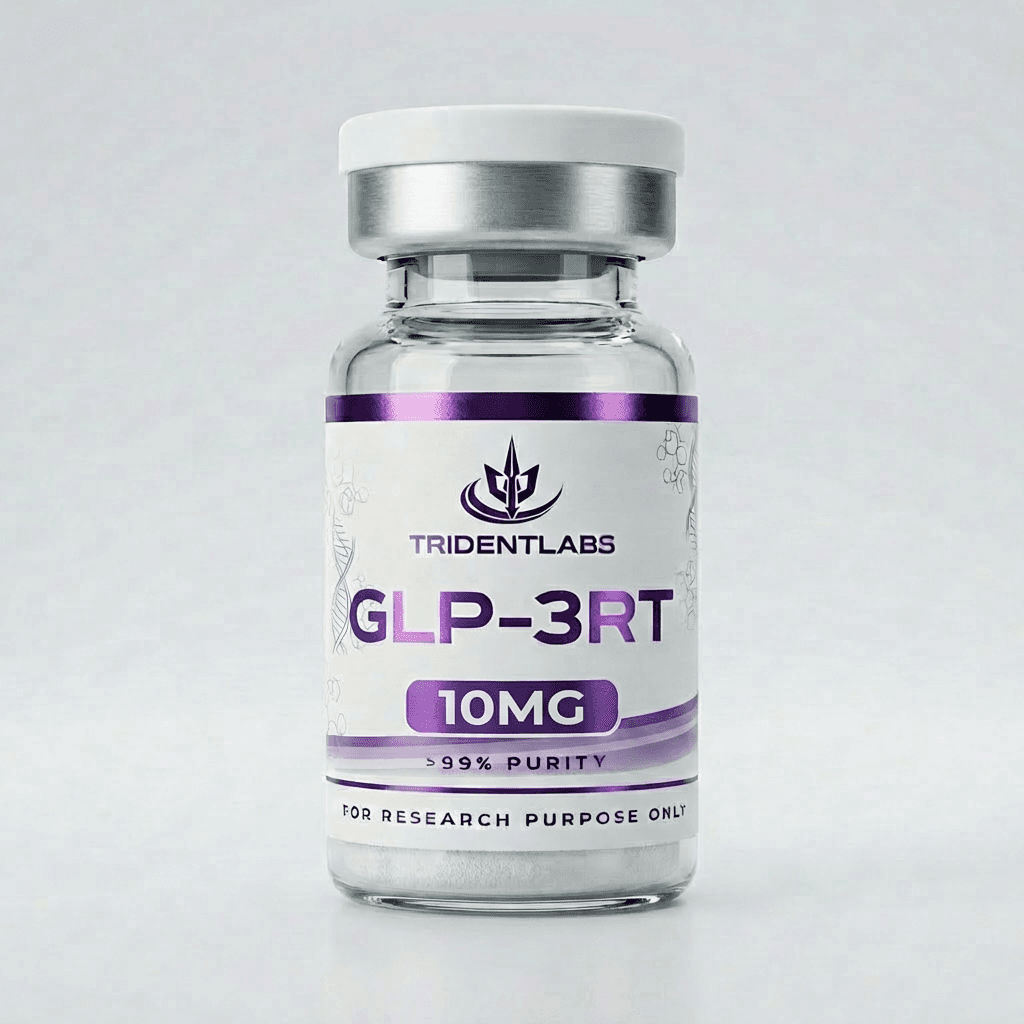
GLP-3RT

GLP-3RT

$140.00